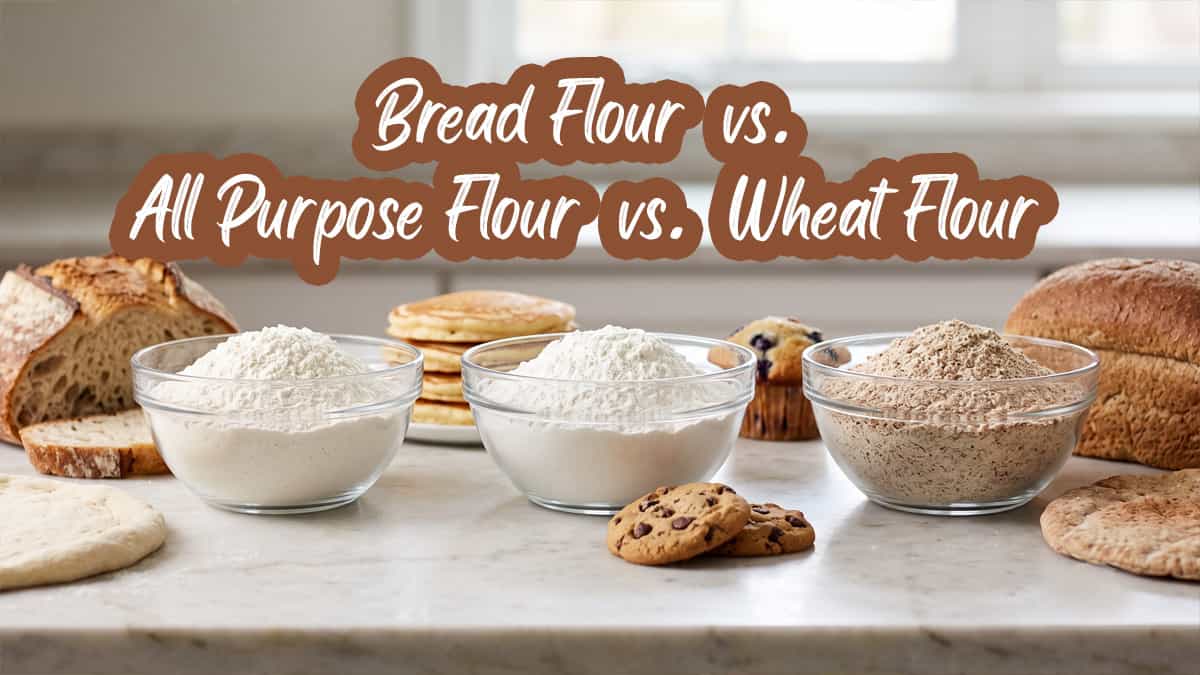
Bread flour, all-purpose flour, and wheat flour can all be used for baking, but they behave differently during preparation and cooking. The biggest differences come from protein, gluten development, milling, fiber, water absorption, and the final texture.
There is also an important naming confusion: in everyday cooking, “wheat flour” often means whole wheat flour, while bread flour and all-purpose flour are also made from wheat.
So which flour is better for bread, pancakes, cookies, pizza, or everyday baking? And what about preparation time, freshness, and digestion?
Let’s compare them from mixing the dough to eating the finished food.
Bread Flour vs All-Purpose Flour vs Wheat Flour
| Feature | Bread Flour | All-Purpose Flour | Whole Wheat Flour |
|---|---|---|---|
| Protein | High | Medium | Usually high |
| Gluten potential | Strong | Moderate | High, but bran affects gluten |
| Dough strength | Strong | Balanced | Heavier |
| Water absorption | High | Moderate | High |
| Texture | Chewy, elastic | Tender, balanced | Dense, hearty |
| Flavor | Mild, wheaty | Mild, neutral | Nutty, earthy |
| Fiber | Lower | Lower | Higher |
| Preparation | More elastic dough | Usually easiest | Often needs more hydration |
| Best for | Bread, pizza, bagels | Cookies, cakes, pancakes, muffins | Whole-grain breads and hearty baking |
1. Bread Flour
Bread flour is the strength builder of the three. Its higher protein content allows more gluten development, producing dough that is elastic and better able to hold the gas created during yeast fermentation.
BEST FOR
- ✓ Bread
- ✓ Sourdough
- ✓ Pizza
- ✓ Bagels
- ✓ Dinner rolls
- ✓ Chewy yeast doughs
Preparation: Bread-flour dough can feel stronger and more elastic during mixing and kneading. For yeast recipes, fermentation and proofing time still depend mainly on the recipe rather than the flour alone.
2. All-Purpose Flour
All-purpose flour is the versatile middle ground. It provides enough structure for many baked foods without producing the same strength as bread flour, making it the easiest of the three to use for various recipes.
BEST FOR
- ✓ Cookies
- ✓ Cakes
- ✓ Muffins
- ✓ Pancakes
- ✓ Biscuits
- ✓ Pies
- ✓ Quick breads
- ✓ Dumplings
- ✓ Many everyday recipes
Preparation: Most quick-baking recipes using all-purpose flour require little preparation time. Cookies, muffins, and pancakes generally don’t need long fermentation or proofing.
3. Whole Wheat Flour
In everyday cooking, “wheat flour” commonly refers to whole wheat flour. It contains the entire wheat kernel (Bran + Germ + Endosperm), giving it more fiber and a stronger, nuttier flavor than refined white flour.
BEST FOR
- ✓ Whole wheat bread
- ✓ Hearty rolls
- ✓ Whole-grain pancakes
- ✓ Muffins
- ✓ Flatbreads
- ✓ Other whole-grain baking
Preparation: The bran and germ affect water absorption and gluten development. Bran can interfere with the gluten network, while the additional grain components absorb more water. The result is often a heavier, denser dough.
Key Baking Comparisons
Which Flour Has the Most Protein?
Protein is important because it influences gluten development, but protein percentage alone does not tell you how a flour will behave.
PROTEIN & GLUTEN BEHAVIOR
- Bread flour → high protein + strong gluten development
- All-purpose flour → moderate protein + moderate gluten development
- Whole wheat flour → often high protein, but bran changes gluten behavior
Which Flour Needs More Water and Resting?
| Factor | Bread Flour | All-Purpose Flour | Whole Wheat Flour |
|---|---|---|---|
| Water absorption | High | Moderate | High |
| Dough feel | Elastic | Easy | Heavier |
| Resting/hydration | Recipe-dependent | Usually simple | Often more useful |
Whole wheat flour generally benefits from enough hydration because its bran and germ absorb water. A resting period can also allow the flour to hydrate more completely. But resting time is not determined by flour alone.
You May Also Like
130+ Unique All-Purpose Flour Recipes: Pancakes, Dumplings, Donuts, Cookies, Tortillas, Pies & More
Which Flour Makes Food Stay Fresh Longer?
Flour alone cannot determine the shelf life of cooked food. A dry cookie and a moist loaf of bread will have completely different storage behavior even if they contain the same flour.
FRESHNESS DEPENDS ON:
- Moisture, Sugar, and fat
- Eggs and dairy
- Fillings and toppings
- Cooking method
- Packaging and storage temperature
- Exposure to air and preservatives
Which Flour Is Easier to Digest?
There is no universal winner because digestion depends on both the person and the finished food. Whole wheat flour contains considerably more fiber than refined white flour, which can be beneficial but may also feel heavier.
DIGESTION FACTORS
- Fiber content
- Fermentation time
- Portion size
- Fat and sugar content
- Other ingredients and cooking method
- Individual tolerance
Can You Substitute These Flours?
Substitution Guidelines
Bread Flour ↔ All-Purpose Flour
Often possible in many recipes. Using all-purpose flour instead of bread flour may produce a softer, less chewy result. Using bread flour instead may produce a stronger or chewier result.
All-Purpose Flour ↔ Whole Wheat Flour
This substitution requires more care because whole wheat flour changes hydration, flavor, texture, and density. For many recipes, replacing only part of the refined flour with whole wheat flour is easier than replacing all of it.
Bread Flour ↔ Whole Wheat Flour
This is a bigger change because the two flours behave differently in dough. Whole wheat flour adds bran, germ, fiber, flavor, and additional water absorption.
Which One Should You Choose?
Choose bread flour when you need strength, elasticity, and chewiness.
Choose all-purpose flour when you want a versatile flour for everyday baking and cooking.
Choose whole wheat flour when you want whole-grain flavor, more fiber, and a heartier finished food.
And don’t judge the flour only by its protein percentage. The real difference appears across the whole process:
Flour → Mixing → Resting → Fermentation → Cooking → Texture → Freshness → Digestion.
Cooking Tips and Ideas
ESSENTIAL PREP HACKS
- Spoon and level flour — never scoop directly to avoid compacting 20% more flour.
- Bring eggs, milk, and butter to room temperature (65–70°F) for better emulsification.
- Make self-rising flour in seconds: 1 cup AP flour + 1½ tsp baking powder + ¼ tsp salt.
- Freeze pre-portioned cookie dough balls to bake fresh straight from frozen.
GOOD
- ✓ Whisk dry ingredients with a fork for cookies and pancakes.
- ✓ Rest pancake and waffle batter for 10-15 minutes to relax gluten.
- ✓ Use ice-cold water and butter for a tender pizza or pie crust.
BAD
- ✕ Don’t scoop flour directly with the measuring cup.
- ✕ Never overmix cake batter; it develops gluten and turns baked goods tough and rubbery.
- ✕ Don’t skip chilling your pie dough bowl before rolling.
EGGLESS & VEGAN SUBSTITUTES
- ✓ Use ¼ cup plain yogurt, sour cream, or buttermilk per egg for added moisture.
- ✓ Mix 1 tbsp ground flaxseed + 3 tbsp water (flax egg) and sit for 5 minutes.
- ✓ Brush empanadas and samosas with plant-based milk instead of egg wash for a golden bake.
SAVORY COOKING SECRETS
- Toast flour for 2-3 minutes when making a roux to add a rich, deep flavor.
- Save ½ cup of starchy pasta water to emulsify sauces and make them silkier.
- Freeze breaded onion rings for 15-20 minutes before frying to perfectly set the coating.